Carbon steel material is widely used across manufacturing, engineering and industrial
applications because of its combination of strength, durability and versatility. From steel
strips and sheets to components used in machinery and tools, carbon steel can be
found in many products that require dependable mechanical performance.
The properties of carbon steel can vary significantly depending on its carbon content,
grade and processing condition. Understanding these differences helps manufacturers
select the right material for a particular application.
Carbon steel is a type of steel in which carbon is one of the primary alloying elements.
Its properties are influenced largely by the amount of carbon present in the material.
As carbon content increases, steel can generally achieve higher hardness and strength,
although this can also affect properties such as ductility and ease of forming. This is
why selecting the appropriate grade is important for industrial applications.
Carbon steel is commonly grouped according to its carbon content and resulting properties.
Low carbon steel contains a relatively low amount of carbon and is generally easier to form and weld. It is often used where flexibility and ease of fabrication are important.
Medium carbon steel provides a balance between strength, hardness and ductility. It can be suitable for components that require greater mechanical strength than low carbon steel can provide.
High carbon steel contains a higher carbon content and can offer increased hardness and strength. It is commonly considered for applications involving wear resistance, springs, cutting components and other demanding industrial uses.
The exact properties of carbon steel material depend on its grade and processing condition, but several characteristics make it useful across industries.
Carbon steel can provide the strength and hardness required for many industrial components. Higher-carbon grades can be processed to achieve specific hardness levels depending on the intended application.
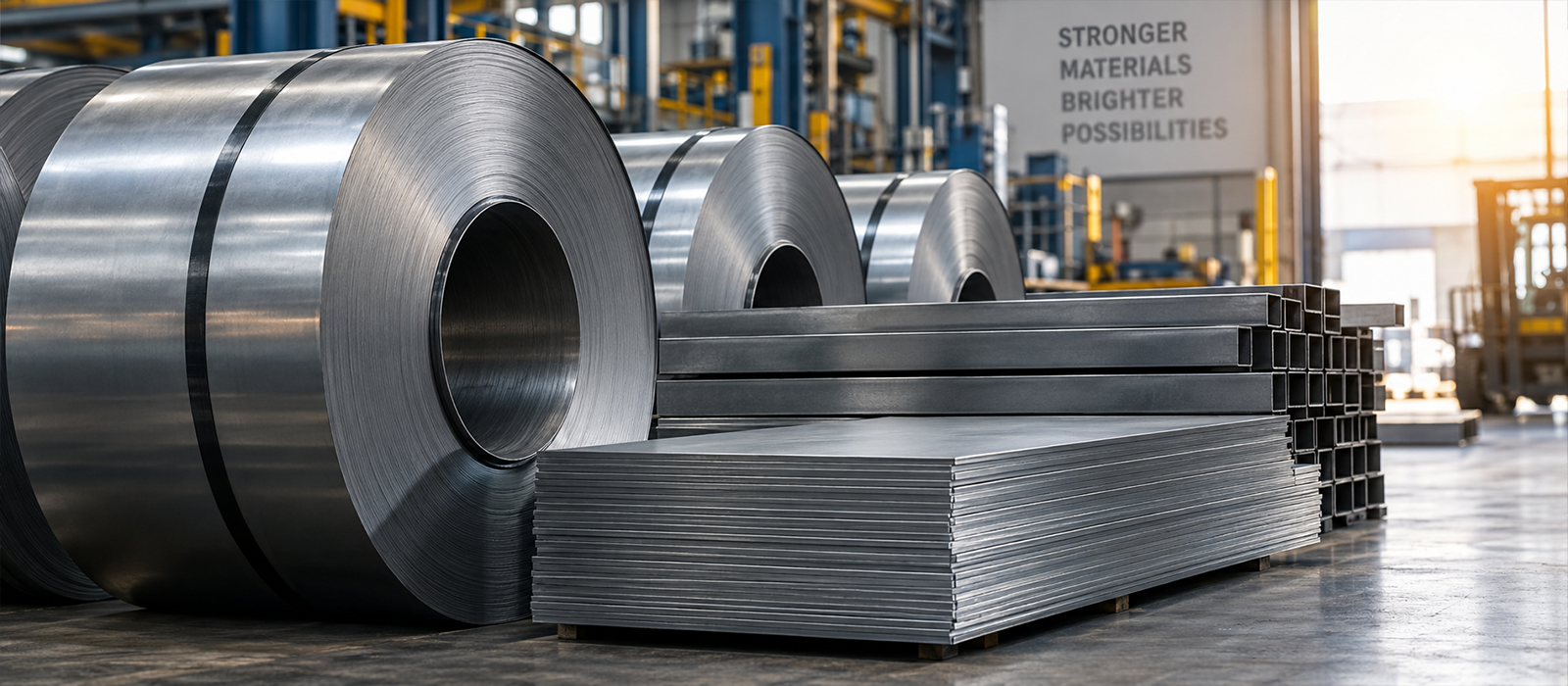
Carbon steel can be manufactured and processed into different forms, including sheets, coils and strips. This makes it suitable for a wide range of manufacturing processes.
Depending on the grade, carbon steel can offer useful machinability or forming characteristics. Material selection should therefore be based on the manufacturing process as well as the final application.
Carbon steel is used in numerous industries because different grades can meet different performance requirements.
Carbon steel strips and sheets are commonly used for industrial components, machinery parts and fabricated products.
Certain carbon steel grades are used in automotive components where strength, dimensional consistency and durability are important.
Higher-carbon grades may be selected for applications requiring increased hardness and wear resistance, including certain cutting and forming components.
Specific carbon steel grades are also used in spring-related applications where the material needs to withstand repeated loading and maintain its mechanical properties.
Choosing the right carbon steel material depends on more than carbon content. Manufacturers should consider the required hardness, tensile strength, thickness, width, surface condition and manufacturing process. The operating environment should also be considered. For example, a material selected for forming may have different requirements from one intended for a hardened industrial component.
Carbon steel remains an important material for modern manufacturing because it can be produced in different grades and conditions to meet a wide variety of requirements. Understanding the differences between low, medium and high carbon steel can help buyers make better material decisions. For industrial applications, the best approach is to discuss the required specifications and end use with an experienced steel manufacturer or supplier. This ensures that the selected carbon steel material is suitable not only for the final product but also for the manufacturing process involved.
