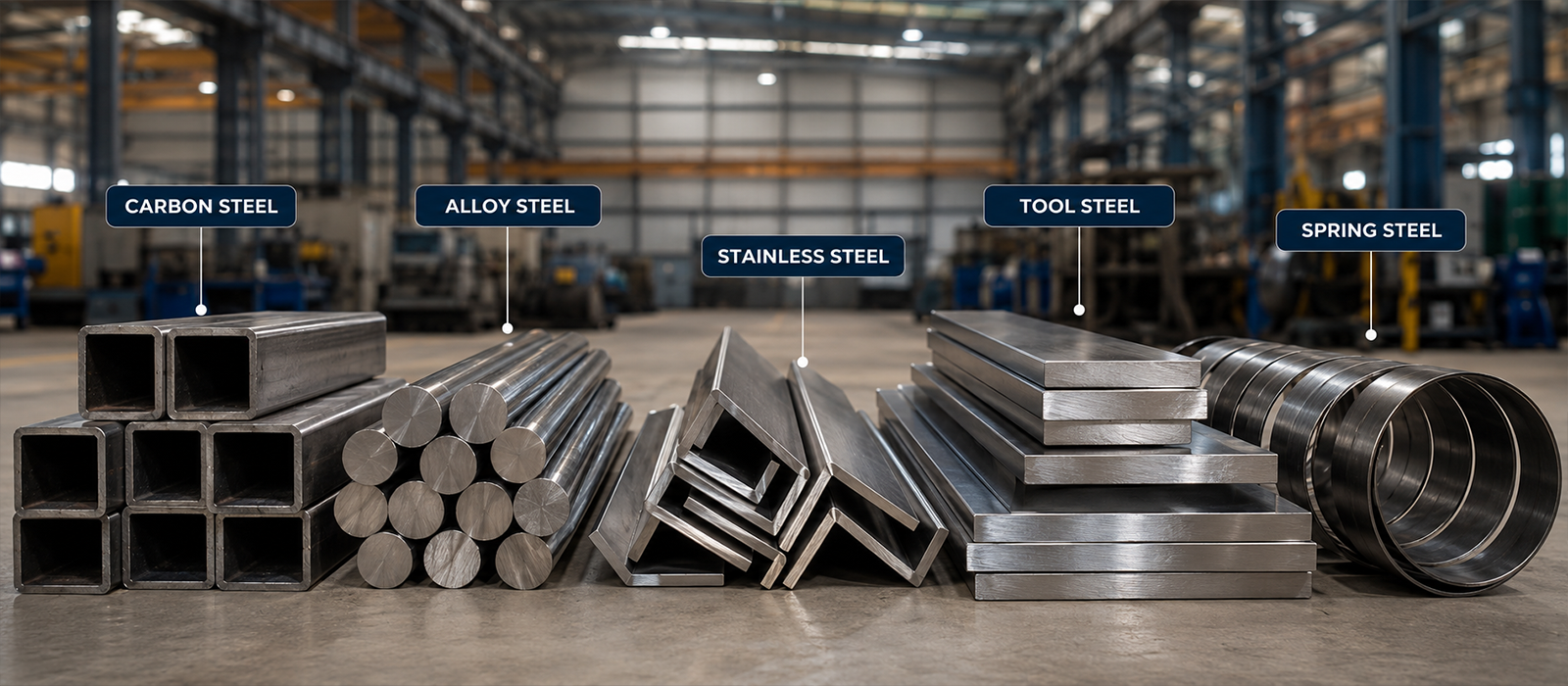
Steel is one of the most versatile materials in the world. From skyscrapers and bridges to automobiles and household appliances, different types of steel serve unique purposes across industries. Understanding these variations helps businesses and engineers select the right steel for strength, durability, and performance.
Carbon steel is the most common type, made primarily of iron and carbon.
Key Features
● High strength and toughness
● Cost‑effective compared to alloyed steels
● Easy to machine and weld
Industrial Applications
Carbon steel is widely used in construction, pipelines, automotive parts, and industrial
machinery where strength is more important than corrosion resistance.
Alloy steel contains elements like chromium, nickel, or vanadium to improve mechanical
properties.
Key Features
● Greater toughness and wear resistance
● Superior fatigue performance
● Customizable for specific applications
Industrial Applications
It is used in aerospace, defense, power generation, and heavy engineering where performance
under stress is critical.
Stainless steel is known for its chromium content, which provides excellent resistance to rust
and corrosion.
Key Features
● Long service life with minimal maintenance
● Hygienic and sleek appearance
● Resistant to harsh environments
Industrial Applications
Stainless steel is used in food processing, medical equipment, chemical plants, and
architectural projects where hygiene and aesthetics matter.
Tool steel is designed for cutting, shaping, and machining other materials.
Key Features
● High hardness and wear resistance
● Ability to withstand extreme heat
● Long‑lasting performance
Industrial Applications
Tool steel is essential in manufacturing tools, dies, and industrial machinery components
Spring steel is valued for its elasticity and fatigue resistance.
Key Features
● Can withstand repeated stress cycles
● Returns to original shape after deformation
Industrial Applications
Used in automotive suspension systems, clips, washers, and precision engineering
components.
Each type of steel offers unique advantages for specific industries. Carbon steel provides affordability and strength, alloy steel delivers enhanced performance, stainless steel ensures durability and hygiene, tool steel supports precision manufacturing, and spring steel offers flexibility. By choosing the right steel, businesses can achieve efficiency, sustainability, and long‑term reliability. Steel Corp continues to supply high‑quality steel products tailored to diverse industrial needs, driving growth and innovation across sectors.
